Holy Week Fasting Explained: Rules and Traditions
If you’re searching for fasting during Holy Week, you’re probably asking a very practical question: what does this actually mean, and do all Christians do it the same way?
The short answer is no. Holy Week fasting is a real and important practice in many Christian traditions, but the rules, expectations, and level of strictness vary. For Roman Catholics, Good Friday is the clearest formal fasting day during Holy Week, while many Orthodox Christians keep a much stricter fast through the whole week. In many Protestant traditions, including Methodist settings, Holy Week is still deeply meaningful, but formal food rules may be less defined.
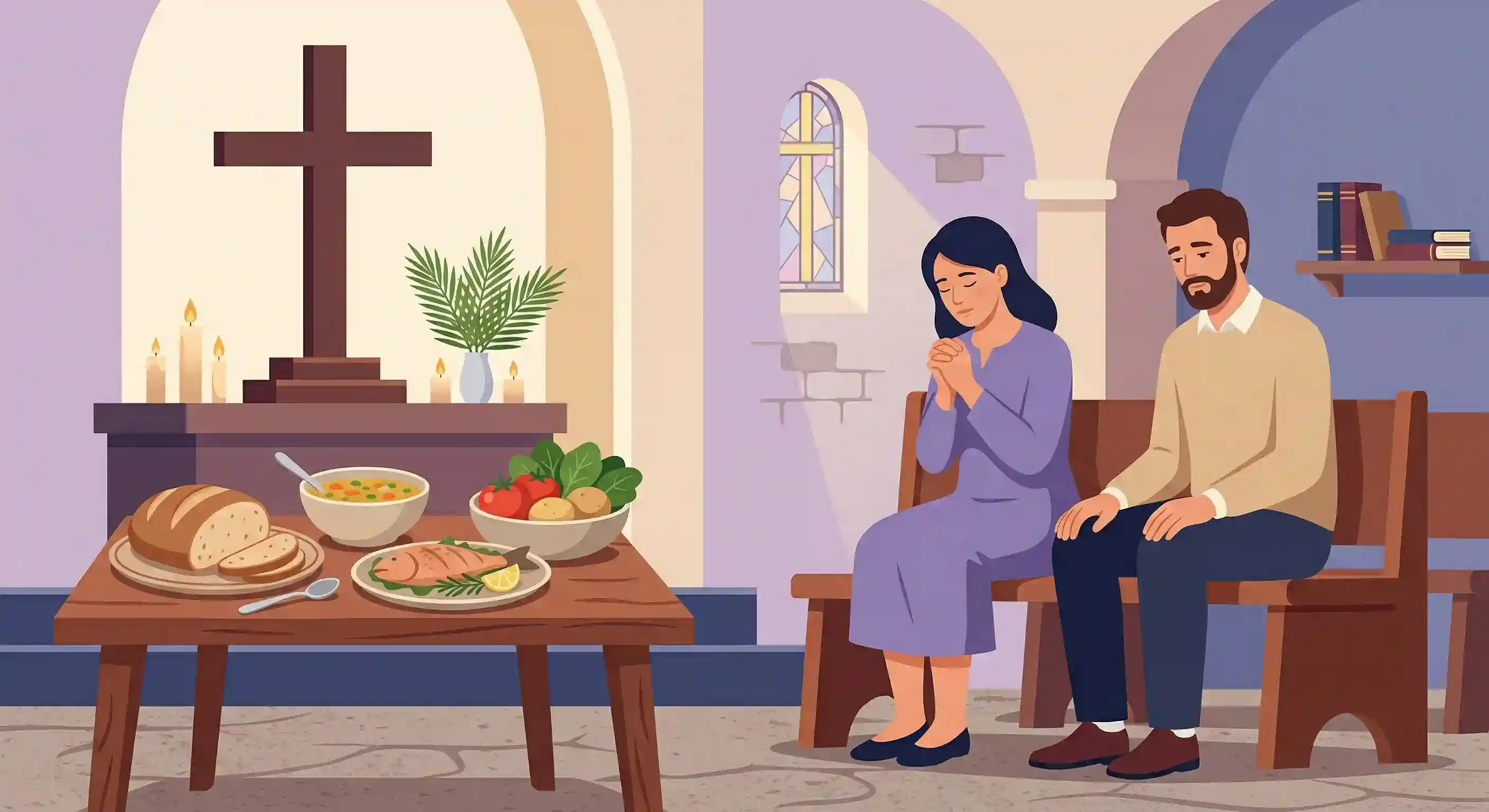
That difference matters. It keeps you from treating one custom as universal, and it helps you observe the week with more respect and less guesswork.
What Is Holy Week and Why Does Fasting Matter?
Holy Week is the final week before Easter. It begins with Palm Sunday and moves through the days leading to the crucifixion of Jesus on Good Friday and the celebration of the resurrection on Easter.
In Christian practice, fasting during Holy Week is not mainly about physical optimization. It’s a spiritual discipline. The point is to make room for prayer, repentance, attention, and self-denial. Food becomes part of that practice, but it isn’t the whole thing.
That’s why many churches speak about fasting together with prayer and acts of charity. The goal is not just to eat less. It’s to live more deliberately.
What Does Holy Week Fasting Usually Mean?
The first thing to clear up is the difference between fasting and abstinence. In Catholic language, fasting usually means reducing the amount of food you eat, while abstinence usually means not eating meat on a specified day. Those aren’t the same practice, even though they often happen together on Good Friday. The United States Conference of Catholic Bishops explains this distinction clearly.
For many readers, Good Friday is the center of the question. That’s because Good Friday is the day most strongly associated with fasting in Western Christian practice. It marks the crucifixion of Jesus, so the fast is tied to mourning, reverence, and solidarity with Christ’s suffering.
Holy Saturday matters too. In Catholic teaching, the fast of Good Friday may continue, if possible, until the Easter Vigil as part of what is often called the paschal fast. The USCCB overview of the Easter Triduum gives the wider liturgical setting for that practice.
How Catholic Holy Week Fasting Is Commonly Observed
For Catholics, the clearest formal rule during Holy Week is Good Friday. In the United States, Good Friday is both a day of fasting and a day of abstinence from meat, according to the USCCB’s official guidance.
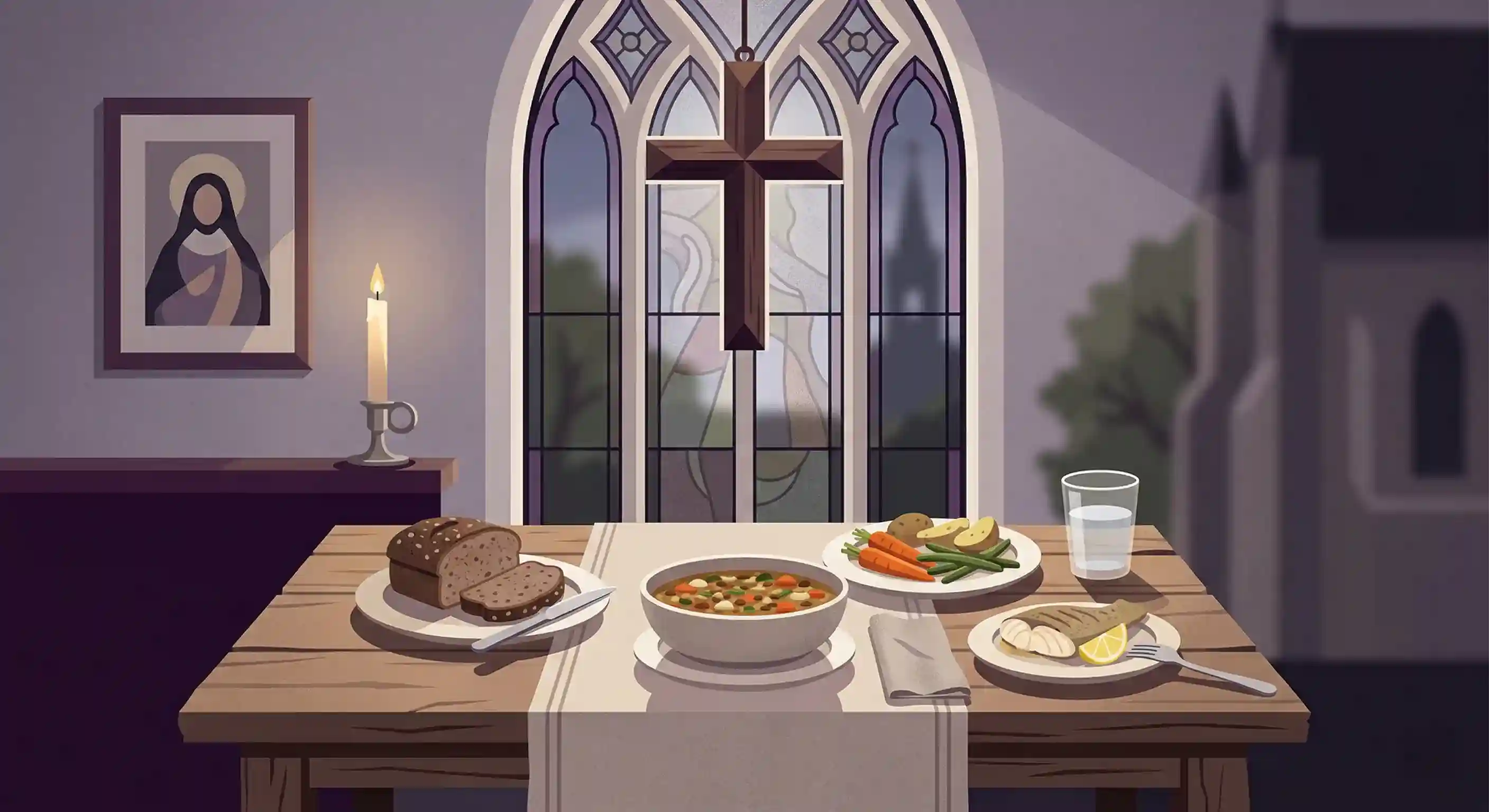
In practical terms, that usually means one full meal and two smaller meals that together do not equal another full meal, along with no meat. Seafood, simple soups, bread, rice, eggs, vegetables, and meatless dishes are often used instead. Local custom varies, but the basic point is simplicity.
Holy Saturday is a little different. It is not always presented as a separate universal legal obligation in the same way Good Friday is, but Catholic sources often encourage continuing the fast until the Easter Vigil when possible. This keeps the focus on waiting, watchfulness, and the movement from death to resurrection.
There are also exemptions. In Catholic practice, age, health, pregnancy, heavy labor, and other serious factors may change what is expected. That’s one reason broad internet advice can only go so far. If you’re trying to follow Catholic Holy Week fasting seriously, parish guidance matters more than a generic checklist.
How Orthodox Holy Week Fasting Differs
Orthodox Christians often keep a much stricter fasting discipline during Great Lent and Holy Week. The Orthodox Church in America fasting guide notes that these are among the strictest fasting periods of the church year, and Holy Saturday is treated with particular seriousness.
In many Orthodox settings, fasting is not only about meal size. It can also involve avoiding meat, dairy, eggs, and sometimes oil and wine, depending on the day and local rule. That sounds straightforward on paper. In real life, it varies by jurisdiction, parish, family practice, health needs, and pastoral advice.
That’s the tricky part nobody mentions enough. People often search for a single Orthodox Holy Week food list, but the safer answer is that Orthodox fasting is structured, traditional, and serious, yet still shaped by your priest, parish, and local custom. If you want to keep it faithfully, ask your parish instead of copying a random chart online.
Do All Christians Fast During Holy Week?
No. Not in the same way.
Catholic and Orthodox traditions have the clearest formal fasting disciplines connected to Holy Week. Protestant traditions are more varied. Some communities encourage fasting on Good Friday. Others focus more on prayer services, Scripture reading, silence, repentance, or acts of service than on formal food restrictions.
That seems to be the case in Methodist contexts as well. Official Methodist and United Methodist Holy Week resources strongly emphasize worship and observance of Good Friday and the days leading to Easter, but they do not present one universal food-fasting rule in the same way Catholic or Orthodox sources do. The Methodist Church’s Holy Week materials and the United Methodist overview of the Great Three Days are useful here because they show the importance of the days without forcing a single mandatory fasting framework across all Methodists.
So if you’re asking, “Do Christians fast during Holy Week?” the best answer is this: many do, but not all in the same form, and not all under the same obligation.
How to Observe Holy Week Fasting Respectfully Today
Start with your own church tradition. That’s the most important step. If you’re Catholic, use Catholic guidance. If you’re Orthodox, follow Orthodox pastoral advice. If you’re Protestant, ask what your church actually teaches or encourages during Holy Week.
Keep the focus where the tradition puts it: prayer, simplicity, repentance, worship, and charity. A Holy Week fast is not supposed to feel like a performance, a diet challenge, or a productivity system. It’s a way of paying attention.
It also helps to stay modest about the practice. If health, pregnancy, age, past eating-disorder history, or medical needs change what you can do, that matters. A spiritually serious observance does not require reckless self-denial.
And if you’re generally learning how fasting works, not just in religious settings but in broader daily life, our intermittent fasting articles cover more general fasting topics. If you want a simple tool for planning a schedule, you can also try our intermittent fasting calculator or use this fasting timer for a basic schedule check. Those are best treated as general resources, though, not replacements for church guidance during Holy Week.
The Bottom Line
Holy Week fasting is meaningful, but it isn’t one-size-fits-all.
For Catholics, Good Friday is the clearest formal fast day, with Holy Saturday often connected through the paschal fast. For Orthodox Christians, Holy Week fasting is usually stricter and more comprehensive. For many Protestants, including many Methodists, Holy Week observance may be real and serious without taking the form of a universal food rule.
If you want to keep Holy Week well, don’t start with internet shortcuts. Start with your church, your tradition, and the spiritual purpose behind the fast. That’s what gives the practice its shape.
Frequently Asked Questions
Is fasting required during Holy Week?
It depends on your Christian tradition. In Catholic practice, Good Friday is a required day of fasting and abstinence for those who are eligible under church rules. In Orthodox practice, Holy Week fasting is usually stricter and more extensive. In many Protestant traditions, fasting may be encouraged, but not always required in a formal or universal way.
Can you eat meat during Holy Week?
That depends on the day and your tradition. In Catholic practice, meat is avoided on Good Friday, which is a day of abstinence. In Orthodox practice, the restrictions are often broader and may include meat, dairy, eggs, and more. In other traditions, there may be no universal food rule at all, so local church guidance matters.
Is Holy Saturday a fasting day?
In many Christian traditions, yes, but not always in the same way. Catholic teaching often presents Holy Saturday as part of the paschal fast that continues from Good Friday until the Easter Vigil, when possible. Orthodox Christians also commonly keep Holy Saturday very strictly. The exact form of the fast depends on the tradition and pastoral guidance.
Do Protestants fast during Holy Week?
Some do, some don’t. Protestant practice is not uniform. Certain churches encourage fasting on Good Friday or throughout Holy Week, while others focus more on worship, prayer, and reflection than on formal food restrictions. Methodist and United Methodist resources, for example, strongly emphasize observance of Holy Week without always setting one denomination-wide fasting rule.
What is the difference between fasting and abstinence?
Fasting usually refers to reducing how much you eat. Abstinence usually refers to avoiding a certain kind of food, such as meat. In Catholic practice, those two ideas come together on Good Friday, which is both a day of fasting and abstinence. The distinction matters because many people use the terms as if they mean the same thing when they do not.
Who is exempt from Good Friday fasting?
Exemptions depend on the tradition, but Catholic guidance commonly considers age, health, pregnancy, medical conditions, and similar serious factors. Orthodox pastoral guidance may also adapt fasting expectations to a person’s health and circumstances. If you’re unsure, talk to your priest, pastor, or parish rather than relying only on a general article online.
Read More
Better to Skip Breakfast or Dinner in Intermittent Fasting?

Discover whether skipping breakfast or dinner works better for weight loss, energy, and health in your intermittent fasting routine
Read moreHow to start intermittent fasting?
Struggling to begin? This guide shows exactly how to start intermittent fasting and stick with it. Boost energy, lose weight, feel amazing.
Read moreHow to know your ideal fasting time?

Find your ideal fasting window with a practical 2-week method. Learn when to choose 14/10 or 16/8, what signals to track, and when to adjust safely
Read more