Intermittent Fasting Calculator
Instantly calculate your fasting & eating windows
Choose Your Fasting Method
Set Your Time
Fill all fields below to unlock Daily Calories Goal, Daily Protein, and fasting body stage output.
Switch between metric (cm, kg) and imperial (ft, lbs).
Related Fasting Tools
If you are planning a fasting schedule, these tools can help you track progress, compare approaches, and turn your plan into something easier to follow day to day.
What is Intermittent Fasting?
Intermittent fasting (IF) is a time‑based eating rhythm where you cycle between periods of eating and fasting.
Rather than counting calories, IF zeroes in on when you eat, unlocking your body's innate fat‑burning and repair mechanisms. During your fasting window, you consume minimal or zero calories; in your eating window, you refuel normally.
This ancient survival hack taps into how humans thrived when meals were scarce—and now you can harness it to feel sharper, leaner, and more energetic.
What is Intermittent fasting calculator?
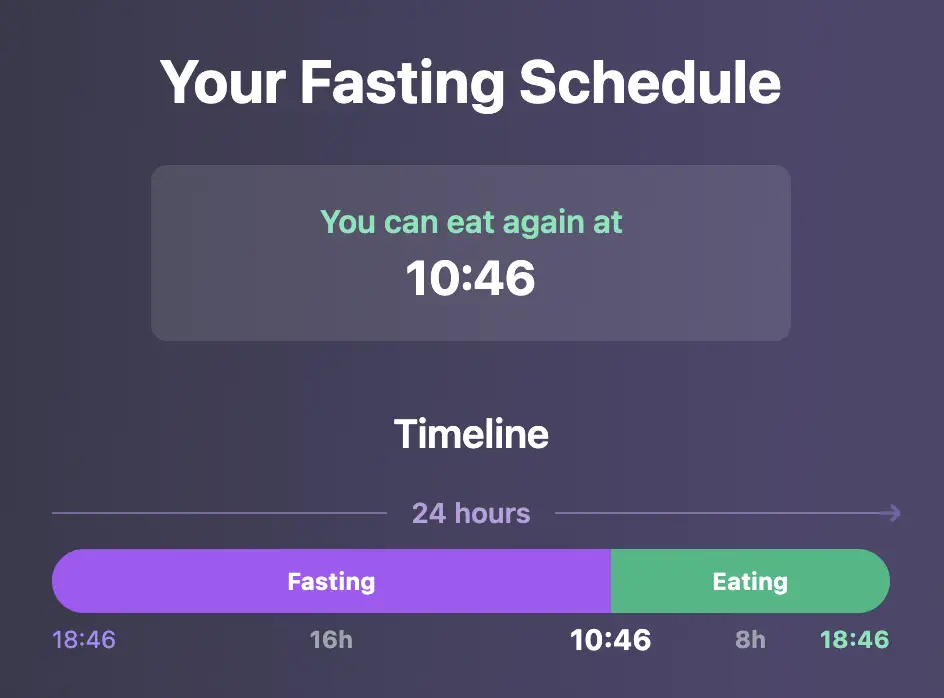
This intermittent fasting calculator (aka fasting calculator or intermittent fasting time calculator) is your shortcut to a perfectly timed fasting schedule. Simply:
- Choose a protocol: 16:8, 18:6, OMAD, or your custom fasting window
- Enter your preferred meal time
- Optional: Toggle Advanced Inputs and enter your details (Gender, Age, Height, Weight, Activity, and Goal) to unlock personalized Daily Calories, Protein targets, and Metabolic Milestones
- Watch your timeline light up and export your plan—zero signup required
Whether you need a free intermittent fasting calculator or a quick fasting window calculator, this tool makes planning foolproof and fast. No fluff, just clarity.
Want to Know How Much You Should Eat While Intermittent Fasting?
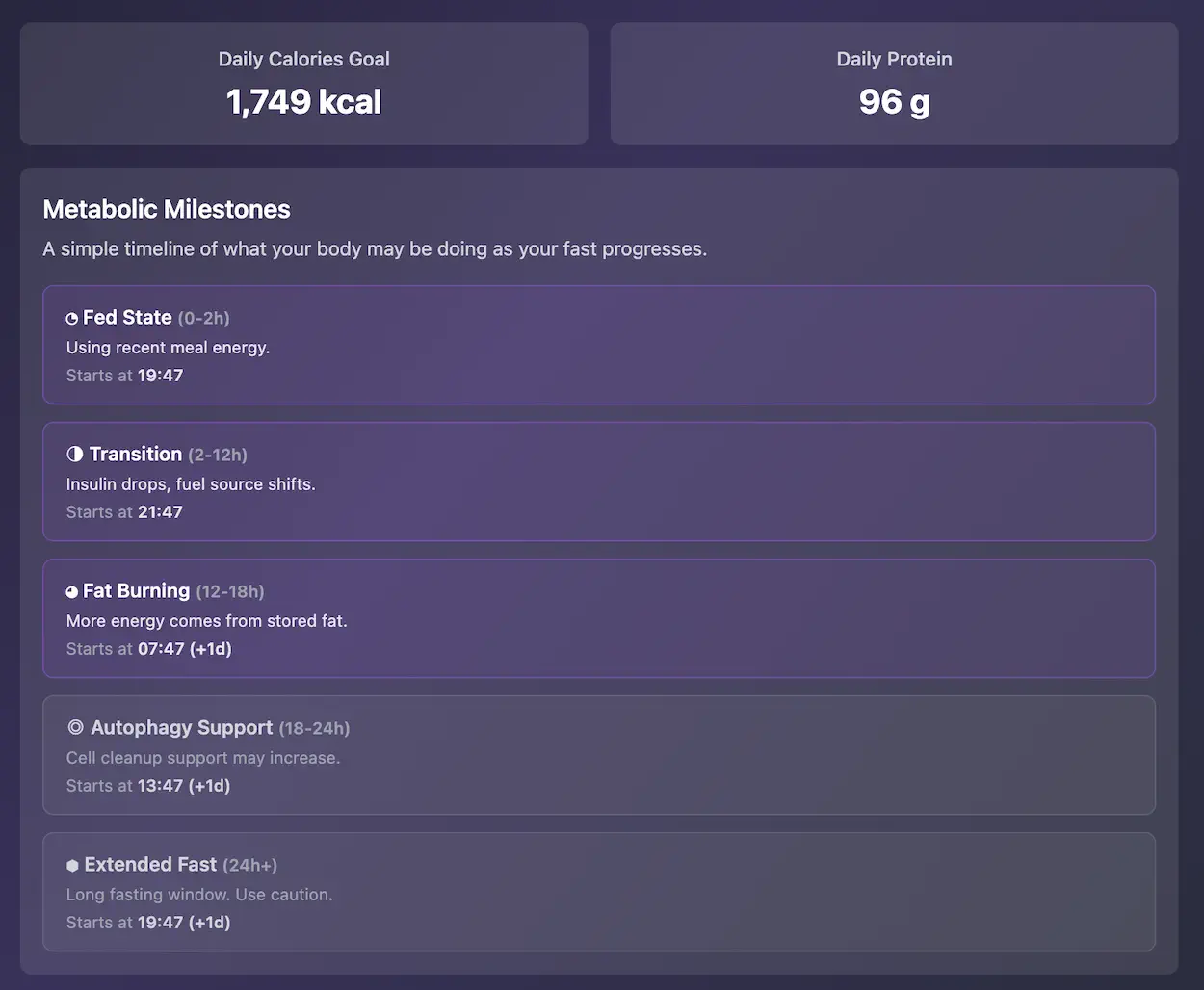
Beyond just timing, our calculator provides a personalized nutritional roadmap based on your biology. By enabling Advanced Inputs, you unlock data‑driven targets rooted in peer‑reviewed clinical research rather than guesswork:
- Daily Calories Goal (Mifflin-St Jeor): We calculate your precise TDEE using the Mifflin-St Jeor equation, the gold standard for modern energy expenditure. Your target is automatically adjusted for your activity level and specific goal—whether it's Fat Loss, Maintenance, or Muscle Gain.
- Daily Protein Target (ISSN Standards): To preserve lean muscle during fasting, we provide targets based on International Society of Sports Nutrition (ISSN) standards. These range from 1.2g to 1.8g per kg, optimized for metabolic health and muscle maintenance.
- Metabolic Milestones (Physiological Phases): Track your body's shift from glucose to fat‑burning. Based on metabolic switching models, we map out when key physiological phases—like the "Ketone Switch" and Autophagy—are likely to occur during your fast.
Why should you do Intermittent Fasting?
Intermittent fasting isn't a fad—it's a science‑backed approach, and our Intermittent Fasting Calculator does all the work for you, no complicated math calculations needed.
- Lose weight naturally by reducing your eating window and tapping into stored fat
- Boost metabolic health: improve insulin sensitivity, dial down inflammation, and kickstart cellular repair
- Hack your hormones: spike human growth hormone (HGH) to support lean muscle and fat burn
- Keep it simple: ditch calorie counting—focus on an intermittent fasting schedule instead
- Support longevity: trigger gene pathways linked to disease resistance and a longer, healthier life
Intermittent Fasting Methods
Our Intermittent Fasting Calculator provides all the popular fasting schedules to help you plan your eating and fasting windows easily.
| Method | Fast : Eat | Example Window | Who It's For |
|---|---|---|---|
| 16 : 8 (most popular) | 16 h : 8 h | 10 am – 6 pm | Beginners & busy lifestyles |
| 14 : 10 | 14 h : 10 h | 9 am – 7 pm | Gentle start for new fasters |
| 18 : 6 | 18 h : 6 h | 12 pm – 6 pm | Intermediate fasters |
| 20 : 4 | 20 h : 4 h | 2 pm – 6 pm | Advanced fasters |
| OMAD (One Meal) | 23 h : 1 h | Any 1‑hr slot | Experienced fasters only |
Who Should Avoid Fasting?
Intermittent fasting is not for everyone. Steer clear or proceed with medical guidance if you're:
- Managing diabetes or blood‑sugar medications (risk of hypoglycemia)
- Underweight, elderly, or have weakened immunity
- Prone to eating disorders or rebound overeating
- Pregnant or breastfeeding
If you have any concerns, it's best to consult a medical professional before using our Intermittent Fasting Calculator.
Intermittent Fasting for Weight Loss
Many studies show IF matches—or outperforms—classic calorie‑restriction diets for fat loss. Here's why:
- Ketosis kick‑start: when glucose dips, your body burns stored fat for energy
- Less snacking: shorter eating windows curb mindless nibbling
- Hormonal harmony: stabilized insulin and optimized hunger hormones
- Inflammation reduction: supports smoother metabolic function
Sustainability varies by person—enable Advanced Inputs and select "Lose Fat" as your goal to discover exactly how many calories you should consume to reach your targets while fasting.
FAQs About Intermittent Fasting
Does coffee break a fast?
Black coffee (under 3 calories) won't end your fast. Skip creams and sweeteners—they trigger metabolic responses.
Does sleeping count as fasting?
Absolutely. Sleep time counts toward your fasting window, so lights‑out boosts your fast.
What are the best hours for intermittent fasting?
Aim for a 7–9 hour eating window—e.g., 11 am–7 pm or noon–8 pm—to sync with circadian rhythms and social life.
Why am I not losing weight on intermittent fasting?
Common reasons include:
- Overeating in your eating window
- Skipping nutrition around workouts
- High stress or poor sleep
- Medical issues like PCOS or thyroid imbalance
Is it better to skip breakfast or dinner in intermittent fasting?
Skipping dinner often aligns better with metabolism and social schedules—but choose what you'll stick with long‑term.
What can I have while fasting?
Stick to zero-calorie options: water, black coffee, and unsweetened tea. Avoid anything with calories, as it will break your fast.
Is intermittent fasting safe?
For most healthy people, yes. However, if you have medical conditions, are pregnant, breastfeeding, or have a history of eating disorders, consult your healthcare provider before starting any fasting regimen.
Can I exercise during fasting?
Yes, you can exercise during fasting periods. Low to moderate intensity workouts are generally well-tolerated. Listen to your body and stay hydrated.
How long does it take to see results?
Results vary, but many people notice changes within 2-4 weeks. Consistency is key—track your progress and adjust your plan as needed.
What are the main benefits of intermittent fasting?
Research suggests potential benefits including improved insulin sensitivity, cellular repair (autophagy), weight management, and heart health support. Individual results may vary.
Can I drink water during fasting?
Yes! Drinking water is essential during fasting periods. It helps maintain hydration, supports bodily functions, and can help manage hunger feelings.
What's the best fasting schedule for beginners?
The 16:8 method (16-hour fast, 8-hour eating window) is often recommended for beginners. It's relatively easy to follow and provides good results while allowing for daily nutrition.
Is intermittent fasting enough for autophagy?
Autophagy typically begins when liver glycogen is depleted, often starting around 14–16 hours into a fast. While popular methods like 16:8 can initiate this cellular "cleanup," deeper levels of autophagy are generally achieved during longer fasting periods of 24–48 hours. Daily intermittent fasting still provides a powerful foundation for cellular health and metabolic benefits.