How to know your ideal fasting time?
You don’t need to copy someone else’s fasting schedule.
If you’re asking “how to know my fasting time,” the right answer is not a fixed rule like 16/8. The right fasting time is the one you can follow consistently, that gives measurable progress, and doesn’t wreck your sleep, mood, or training.
This guide gives you a practical 2-week method to find that window.
Quick safety note: This article is educational, not medical advice. If you’re pregnant, breastfeeding, have a history of eating disorders, live with diabetes, or use glucose-lowering medication, talk to a clinician before trying intermittent fasting (see guidance from NIDDK).
What the “right fasting time” actually means
Most people choose a fasting window by trend. That’s backward.
A useful fasting window should pass three tests:
- Sustainable: You can do it most days without white-knuckling.
- Effective: You see progress in appetite control, waist/weight trend, or eating consistency.
- Functional: Your energy, mood, sleep, and training stay acceptable.
That’s it. If one of these breaks, your window probably needs adjustment.
This approach matches mainstream guidance that intermittent fasting is one tool, not magic, and works best when it helps you eat in a way you can maintain long term (see Mayo Clinic).
14/10 or 16/8? Pick your starting point
If you’re a beginner, start easier than you think.
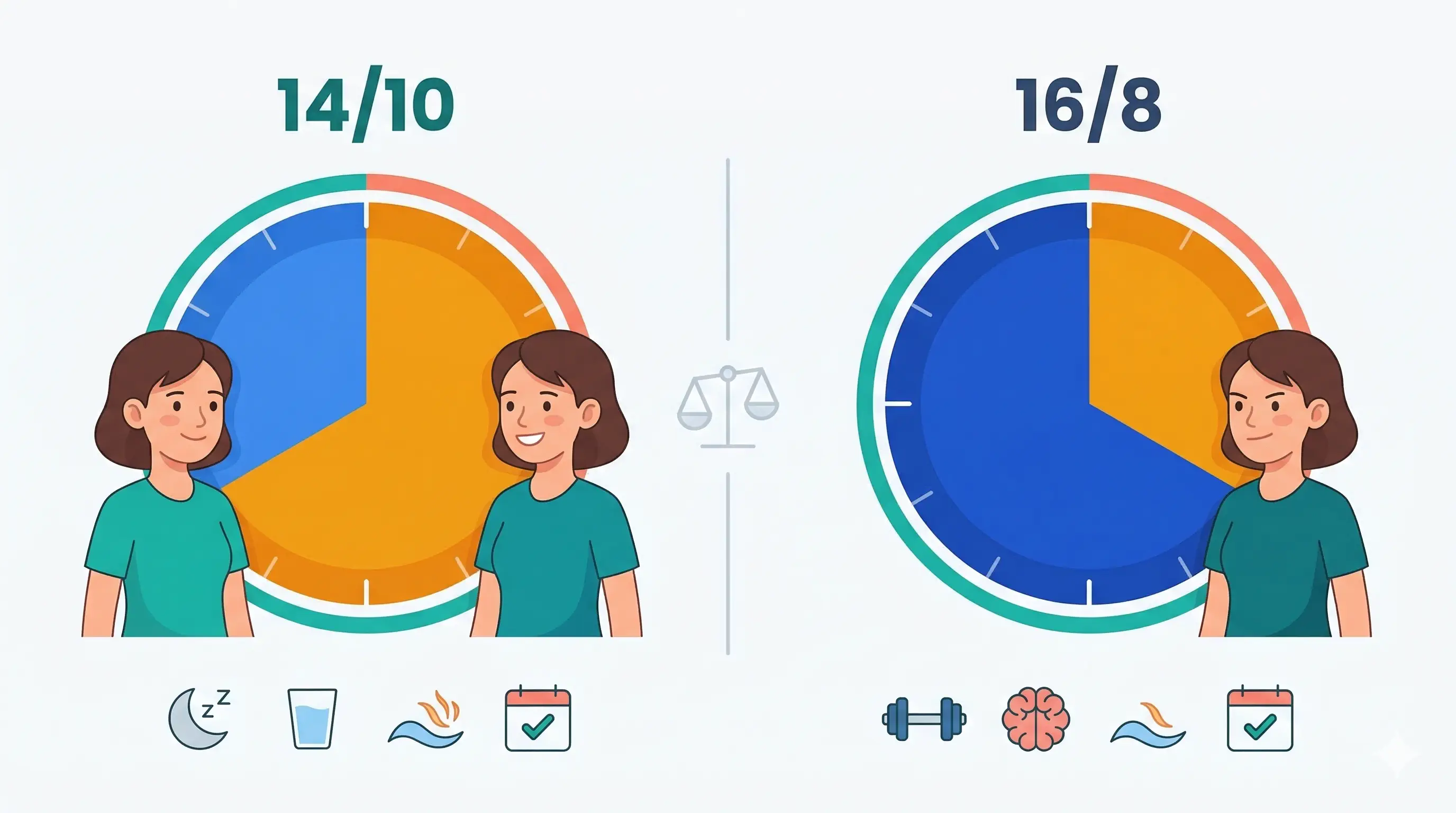
Start with 14/10 if most of these are true
- You’re new to fasting.
- You snack late at night.
- You train hard and recover slowly.
- You often sleep under 7 hours.
- Your work schedule changes day to day.
You can try 16/8 from day one if most are true
- You already skip breakfast naturally.
- You can keep meal quality stable without bingeing.
- You sleep well and recover well.
- Your schedule is predictable.
If you want an exact start/end schedule based on your last meal time, use this tool to calculate your fasting window.
A randomized trial in adults with obesity and type 2 diabetes found that both 14/10 and 16/8 time-restricted eating approaches can be workable in the right context, which supports a practical idea: pick the schedule you can execute first, then optimize (PubMed trial).
The 2-week protocol to find your fasting time
This is the core method.
Week 1: Lock one realistic window
Choose 14/10 or 16/8 and keep it stable for 7 days.
Also keep these basics stable:
- Protein intake (don’t let it crash)
- Meal quality (whole foods, enough fiber)
- Hydration
- Sleep schedule
Why? If you change ten things at once, you won’t know whether fasting time helped.
Week 2: Adjust by 30–60 minutes only
At day 8, review your signals.
- If adherence is high and you feel fine but progress is flat, extend fasting by 30–60 minutes.
- If adherence is high and progress is good, keep the same window.
- If sleep, mood, recovery, or training dropped, shorten by 30–60 minutes.
Small adjustments beat dramatic jumps.
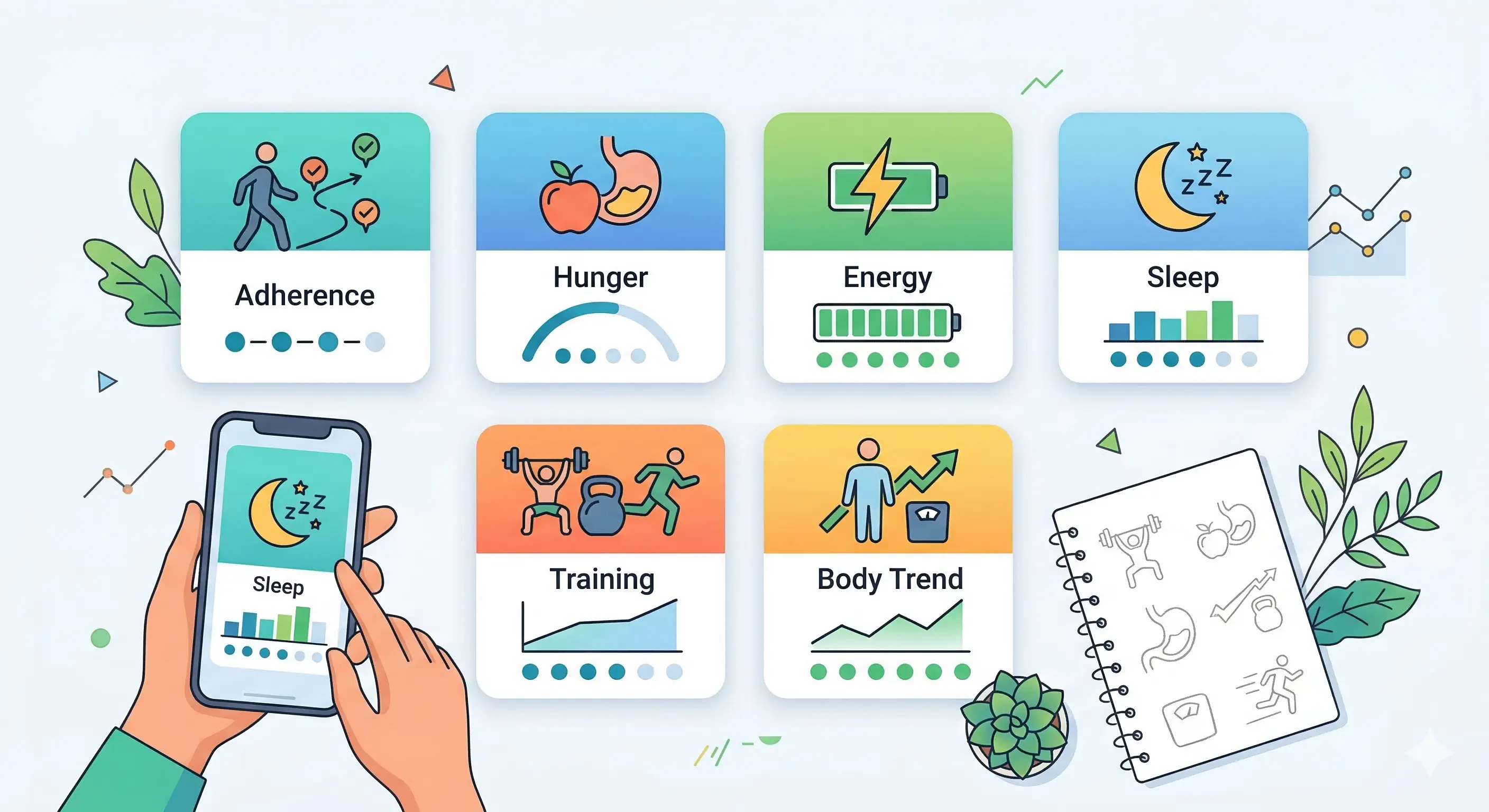
Track these 6 signals (daily, 1–5 score)
If you want to know your ideal fasting time, track signals instead of guessing.
| Signal | What to ask | Good sign |
|---|---|---|
| Adherence | Did I follow my planned window today? | 5–6+ days/week on plan |
| Hunger control | Was hunger manageable, or did I obsess over food? | Hunger comes in waves, manageable |
| Energy | Did I feel steady during work/training? | No major crashes |
| Sleep | Did fasting hurt sleep quality or duration? | Sleep stable or better |
| Training performance | Did strength/endurance hold up? | No clear drop for >1 week |
| Body trend | Is waist/weight trend moving in the right direction? | Slow, steady change |
Use trends, not one bad day.
This caution is consistent with health-system guidance and clinician-focused resources (for example: NIDDK, NHS-related patient guidance)
Signs your fasting time is working
- You can follow it without constant stress.
- Evening snacking drops.
- Appetite feels more predictable.
- Waist/weight trend improves gradually.
- Training and recovery remain acceptable.
You’re not looking for perfection. You’re looking for a setup you can keep for months.
Signs your fasting time is too long
- Repeated dizziness or shakiness
- Persistent irritability
- Sleep disruption for several nights
- Training performance falls and doesn’t recover
- You overeat repeatedly when your eating window opens
If this is happening, shorten your window. Don’t treat suffering as progress.
Signs your fasting time is too short
- You can “complete” the fast but still graze all day
- Appetite is not improving
- No trend change after consistent execution and food quality control
In that case, extend by a small step and reassess in 7 days.
Weekly decision rule: extend, hold, or shorten
Use this simple rule every week:
- Extend if adherence is high, recovery is okay, and progress stalled for at least 10–14 days.
- Hold if adherence and progress are both acceptable.
- Shorten if recovery, mood, sleep, or training worsens.
This is how you individualize fasting time without overthinking.
Common mistakes that make people pick the wrong fasting window
1) Going too aggressive too early
Starting at 18+ hours because it sounds “hardcore” often backfires.
2) Ignoring food quality
A fasting window can’t compensate for a chaotic eating window.
3) Using hunger alone as the only metric
Some hunger is normal. The key is whether you can function and recover.
4) Changing your schedule every two days
You need enough stable days to see patterns.
Who should get medical input before fasting
Before starting intermittent fasting, check with a professional if you are:
- Pregnant or breastfeeding
- Living with diabetes, especially if taking insulin or glucose-lowering medication
- Living with chronic medical conditions requiring meal-timed medication
- Recovering from or at risk for disordered eating
This caution is consistent with health-system guidance and clinician-focused resources (for example: NIDDK, NHS-related patient guidance).
A simple 2-week fasting tracker template
Copy this into your notes app:
- Window planned: __ / __
- Window completed? (Y/N)
- Hunger (1–5):
- Energy (1–5):
- Sleep quality (1–5):
- Training quality (1–5):
- Evening cravings (1–5):
- Weekly waist or weight trend:
- Decision next week: Extend / Hold / Shorten
The template is basic on purpose. You’ll actually use it.
If you prefer automated tracking and reminders, try this free intermittent fasting timer.
The bottom line
Your ideal fasting time is not the longest one you can survive.
It’s the shortest window that gives you reliable progress with good adherence and acceptable recovery. For most beginners, that means starting with 14/10, then adjusting in small steps.
Run the 2-week test. Track your signals. Make one change at a time.
That’s how you find your fasting time and keep it.
FAQ
1) Can I drink coffee during fasting?
Usually yes, if it’s plain coffee without calories. Many people use black coffee or unsweetened tea during the fasting window. But if caffeine worsens anxiety, sleep, or cravings, reduce it or shift it earlier. The practical question is not “is coffee allowed?” but “does this help me stick to the plan without side effects?”
2) Is feeling hungry during fasting normal?
Yes. Mild, wave-like hunger is common, especially in the first 1–2 weeks. What matters is function: you should still be able to work, train, and sleep reasonably well. If hunger becomes extreme and leads to repeated overeating, your current fasting time may be too long or your meals may lack protein and fiber.
3) How long does it take to know if my fasting window is working?
Most people need about 10–14 days of consistent execution to judge a window fairly. Don’t decide after one rough day. Look at trends in adherence, cravings, energy, sleep, and body measurements. If those trends improve, keep the window. If they worsen, adjust by 30–60 minutes.
4) Should women use a different intermittent fasting schedule?
Not automatically, but individual response varies. The same rule still applies: choose the most sustainable window that supports progress and recovery. If cycle symptoms, sleep, mood, or training quality worsen, shorten the fasting window and reassess. Personal response matters more than rigid formulas.
5) What should I do if I feel weak during fasting?
First check basics: hydration, electrolyte intake, sleep, meal quality, and total calories. If weakness continues for several days, shorten the fasting window and prioritize recovery. Repeated dizziness, severe fatigue, or symptoms that interfere with daily function should be discussed with a healthcare professional.
6) Should I work out in a fasted state or during my eating window?
Either can work. Choose based on performance and recovery. If fasted training feels fine and performance is stable, keep it. If strength or output drops, train closer to your eating window so you can fuel and recover better. Your training quality is more important than forcing a specific fasting rule.
Read More
Why is 16 hours the magic number for fasting?

Learn the science behind 16 : 8 intermittent fasting. Find out why a 16 hour fast boosts fat loss, improves metabolism, and supports longevity.
Read moreBetter to Skip Breakfast or Dinner in Intermittent Fasting?

Discover whether skipping breakfast or dinner works better for weight loss, energy, and health in your intermittent fasting routine
Read moreWhat are the basic rules for intermittent fasting?

Unlock your best self! Discover essential intermittent fasting rules to boost energy, weight loss, and simplify healthy living.
Read more