Does the CPB Diet Actually Work? Evidence Explained
You’ve probably seen the pitch by now: eat chicken, potatoes, and broccoli for a few weeks, stop counting calories, and watch body fat drop fast.
That’s the promise behind the CPB diet. And yes, there are a few reasons it can look effective in the short term. But that’s not the same thing as saying the CPB diet is a proven, sustainable, or nutritionally complete fat-loss strategy.
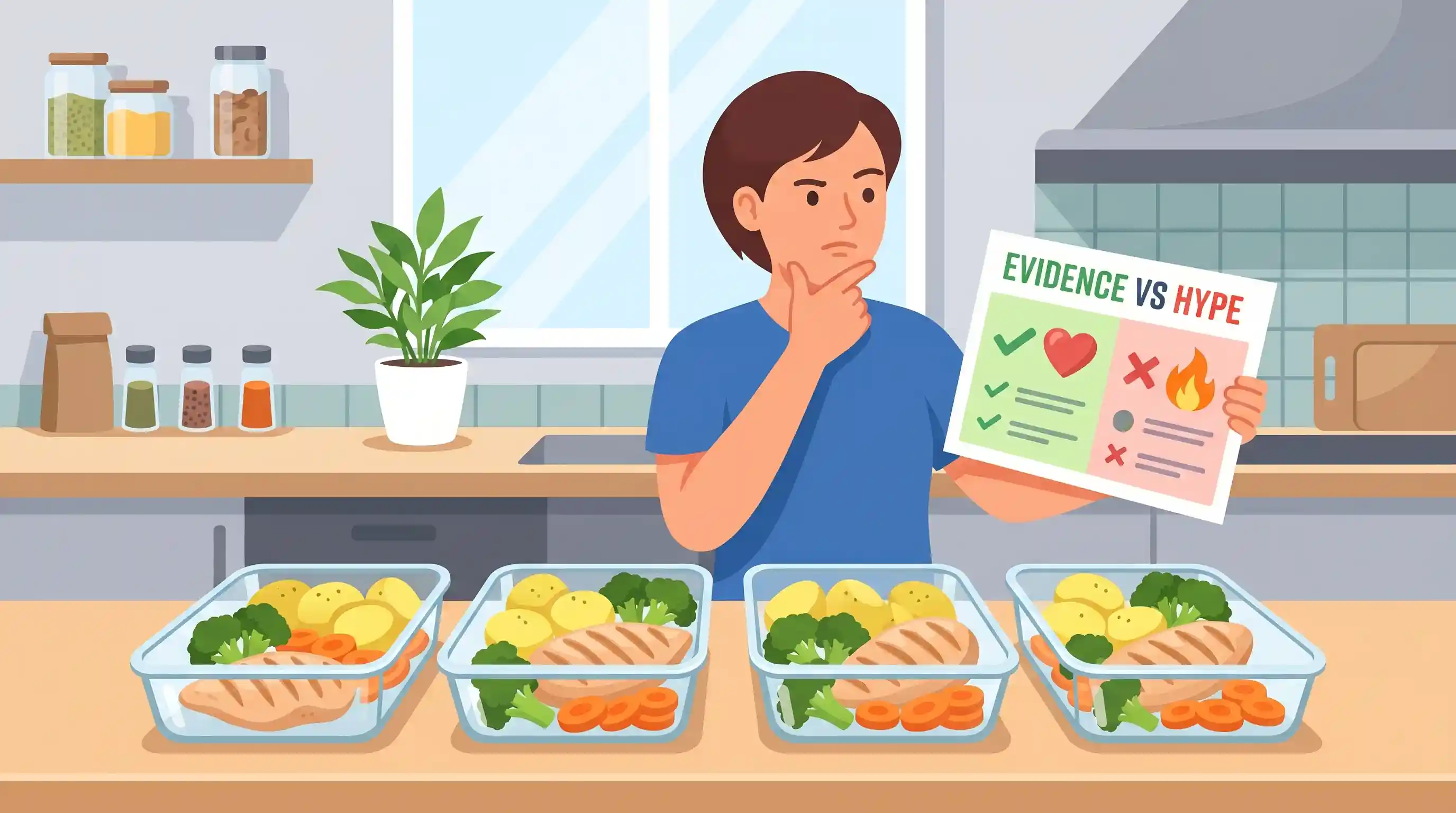
Here’s the clearer answer: the CPB diet may help some people eat less without tracking calories because it is repetitive, filling, and low in decision fatigue. What we do not have is strong clinical evidence showing that the named CPB diet is a validated diet protocol on its own.
So if you’re wondering whether it works, the honest answer is: it can work for some people for some goals, for some period of time. That’s a very different claim from “this is the best way to lose fat.”
What the CPB Diet Is
In current search and social media use, CPB usually stands for chicken, potatoes, and broccoli. But the original viral version is a little more specific than that.
If you’re here because you specifically want the downloadable plan formats, use our CPB Diet Plan PDF page to preview and download both the CPB Strict Diet PDF and the CPB Flex Diet PDF in one place.
The term appears to have been popularized by Jeremy Ethier in a January 2026 Built With Science article and the matching YouTube video. In that version, the short-term protocol was built around chicken breast, potatoes, broccoli, and carrots, with three core rules:
- Eat only the approved foods, buffet-style
- Limit olive oil to one tablespoon per meal
- Skip liquid calories, diet sodas, and artificial sweeteners
That detail matters. A lot of secondary coverage turns the idea into a cleaner, catchier “chicken-potatoes-broccoli” formula, but the original protocol was broader than the name implies.
It also wasn’t introduced as a formal medical diet. It was framed as a short, aggressive experiment meant to reduce cravings, simplify food choices, and make overeating harder. That’s an important distinction. You’re not looking at a long-established nutrition framework here. You’re looking at a viral fat-loss experiment built from a few well-known diet principles.
Why the CPB Diet May Seem to Work So Fast
The CPB diet doesn’t need a secret metabolic trick to produce results. If it works, it usually works for much simpler reasons.
Fewer Food Decisions
Most people don’t just overeat because they’re hungry. They overeat because they’re tired, distracted, stressed, social, or stuck making food decisions all day.
A rigid meal structure cuts a lot of that out. If every meal is some version of chicken, potatoes, broccoli, and carrots, there is less room for impulse eating, delivery decisions, restaurant extras, and the “I’ll just grab something” spiral.
That alone can lower calorie intake.
High-Satiety Foods
This is the strongest part of the CPB idea.
Chicken breast is a lean protein source, and higher-protein diets tend to improve fullness and appetite control for many people. Potatoes are also important here. In the classic satiety index study, boiled potatoes ranked extremely high for fullness compared with many other foods.
Broccoli and carrots add volume, fiber, and chewing time without adding many calories. Put those foods together, and you get large, plain meals that can feel physically filling even when calories are relatively controlled.
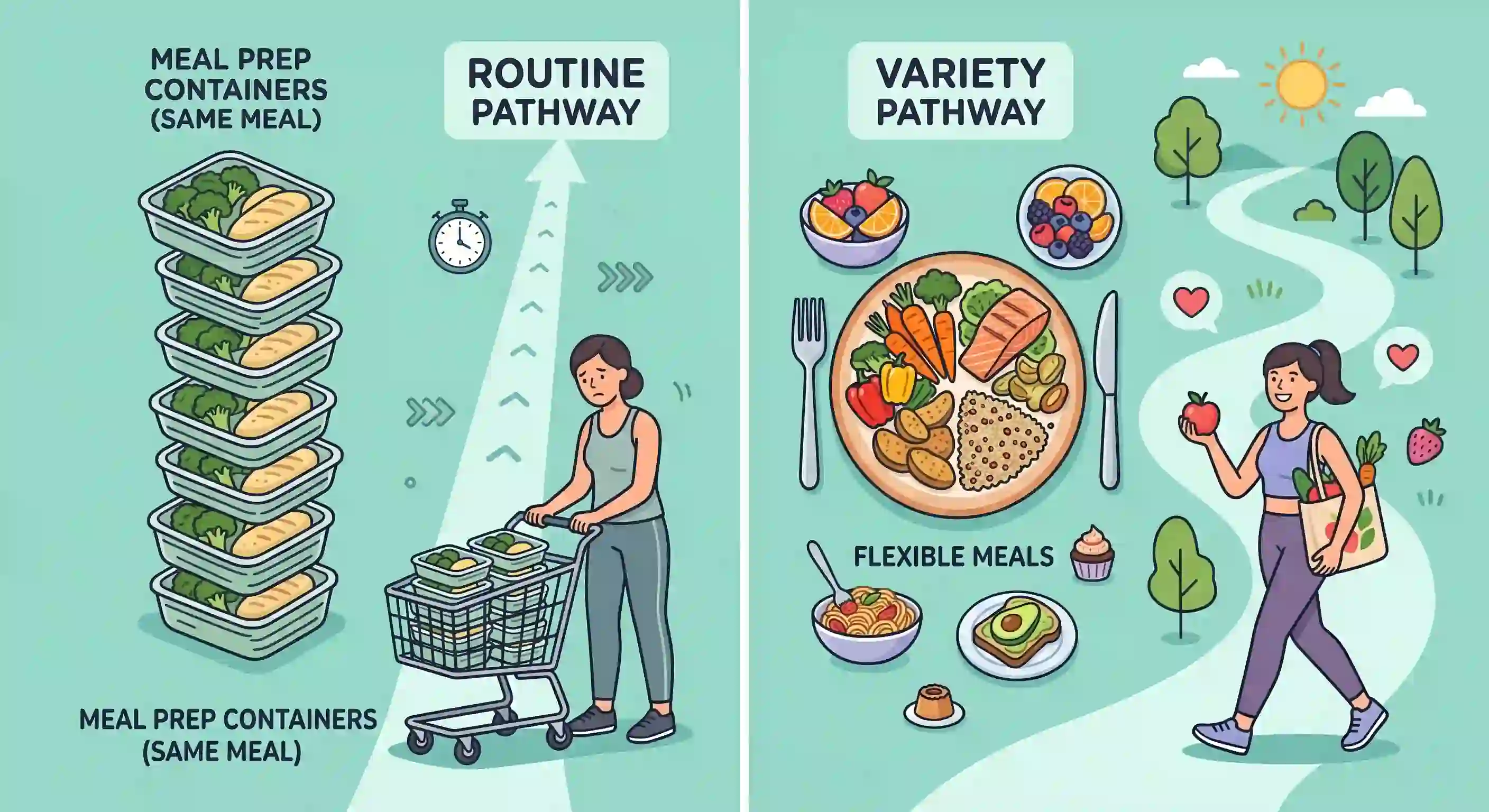
Less Variety, Less Overeating
Here’s the catch. Exciting food is easier to keep eating.
Research on dietary variety suggests that novelty can increase food intake, while repetitive meals may reduce it over time. That doesn’t make boring food magical. It just means your brain may stop pushing for “more” as aggressively when every meal feels pretty much the same.
This is one reason the CPB diet can look powerful in the first week or two. It doesn’t necessarily make your body burn more fat. It makes it easier to eat less without feeling like you’re on a traditional diet all day.
What Science Supports the Idea
There is some real science underneath the CPB diet. It just supports the mechanisms, not the named diet as a whole.
Potatoes and Fullness
Potatoes have a weird reputation in diet culture. People often treat them like a junk carb by default.
That’s too simplistic. Prepared plainly, potatoes can be very filling for the calories. That’s why the satiety angle shows up over and over in CPB discussions. The real lesson isn’t that potatoes are a miracle food. It’s that a filling carb can be more useful for fat loss than a carb you can overeat easily.
Context matters too. A potato baked or boiled with moderate fat is not the same as fries cooked in a lot of oil.
Protein and Appetite Control
The second support beam is protein.
Reviews on higher-protein diets suggest they can help improve fullness and reduce hunger in at least some contexts. That’s one reason chicken breast shows up in so many cutting diets. It gives you a lot of protein without adding much fat, which makes it easier to stay full while controlling calories.
Again, this doesn’t mean you need to eat plain chicken at every meal. It means the underlying principle makes sense.
Food Monotony and Calorie Intake
The third support beam is low variety.
This part sounds almost too obvious, but it’s real. When meals become repetitive, many people lose some of the reward-driven urge to keep eating. The CPB diet leans hard into that effect.
So yes, the logic is coherent:
- high-protein meals
- filling carbs
- low-calorie vegetables
- fewer food decisions
- less novelty
That combination can absolutely make fat loss easier for some people.
What the Science Does Not Prove
This is where a lot of social media coverage gets sloppy.
No Large Trials on the Named CPB Diet
We do not have strong clinical trial evidence validating the CPB diet itself as a named, tested, superior diet.
What we have instead is a bundle of indirect support:
- protein can help fullness
- potatoes can be highly satiating
- repetitive meals may lower intake
- simpler food environments can reduce overeating
Those points matter. But they do not prove that a strict chicken-potatoes-broccoli protocol is the best, safest, or smartest fat-loss option.
Anecdotes Are Not the Same as Evidence
A big part of the CPB trend comes from before-and-after storytelling, challenge content, and secondary media summaries.
That makes the diet easy to share. It does not make the evidence stronger.
The original Built With Science experiment is interesting. It is also still a very small experiment with highly specific conditions. That’s useful for generating curiosity. It’s not enough to settle the question for the general public.
The same goes for community reports. For example, one Reddit discussion about trying a CPB-style diet surfaced headaches, nausea, sodium concerns, hydration issues, total calorie intake, and even food safety questions. That’s valuable as a real-world signal. It still isn’t controlled evidence.
Early Weight Loss Is Not Always Pure Fat Loss
This part gets missed all the time.
If someone suddenly switches from a higher-calorie, higher-variety, more processed diet to a very plain whole-food plan, early scale changes may reflect less food volume in the gut, less sodium fluctuation, lower glycogen stores, and less water retention, not just fat loss.
That doesn’t mean the progress is fake. It means rapid early changes should be interpreted carefully.
When an article, reel, or clip makes a rigid diet look almost too effective, this is one of the first questions you should ask.
Is the CPB Diet Safe or Sustainable?
Short term and long term are different conversations.
Who May Struggle With It
A very repetitive, restrictive plan is not a great fit for everyone.
If you have kidney disease, a history of disordered eating, or a medical condition that makes nutrition management more complex, this is something to discuss with a qualified clinician first. Mayo Clinic also notes that high-protein approaches are not a good fit for everyone. The same goes if you already know that rigidity tends to trigger all-or-nothing eating for you.
Even for otherwise healthy people, the first week can be rough. Community discussions around the diet often bring up boredom, low sodium intake, low total calories, digestive changes, and the psychological drag of eating the same foods over and over.
Nutrient Variety Concerns
This is the biggest structural weakness of the diet.
According to NIH guidance on healthy weight control, sustainable fat loss is usually built around a balanced eating pattern you can live with. And USDA MyPlate guidance emphasizes dietary variety for a reason.
A diet built around just a few foods can make calorie control easier. It can also narrow your micronutrient intake, shrink food flexibility, and make social eating harder than it needs to be.
That doesn’t automatically make the CPB diet dangerous in a short experiment. It does mean you should be careful about turning a temporary strategy into a default lifestyle.
Why Short-Term Success Can Fail Long-Term
Extreme simplicity works partly because it removes choice.
But long-term success usually depends on the opposite skill: learning how to manage normal meals, social meals, restaurants, snacks, weekends, and imperfect days without losing the plot.
That’s why rigid diets often feel amazing right up until they don’t. The transition out is the real test.
If a diet only works while your life stays narrow and repetitive, it may be effective as a short reset. It may not be a system you can actually trust for the next year.
A Smarter Takeaway for Fat Loss
This is the part worth keeping.
You do not need to eat chicken, potatoes, and broccoli for 30 days to get the useful benefits behind the trend.
Which CPB Principles Are Worth Keeping
A few ideas from the CPB diet are genuinely practical:
- Build meals around protein
- Use filling carb sources instead of only hyper-palatable ones
- Make vegetables do more of the volume work
- Keep a few default meals on repeat
- Reduce food decisions when life gets busy
That’s the real value here.
How to Make Them More Sustainable
A better version for most people looks less dramatic.
You might keep two or three simple high-protein meals in rotation, use potatoes when they help you stay full, add more fruit and vegetable variety, and leave room for meals that actually fit real life.
You can also estimate your needs before doing anything extreme. A TDEE calculator helps you estimate your daily calorie needs, and a BMR calculator gives you a better sense of your baseline energy use.
If you want to track progress beyond body weight alone, a body fat calculator can add useful context.
When to Choose a Different Approach
If you hate repetitive food, need more flexibility, or tend to rebound after rigid plans, the CPB diet is probably not your best option.
You’d likely do better with a broader high-protein eating pattern, a moderate calorie deficit, and a structure you can repeat without feeling trapped by it. For some people, that may even pair better with other frameworks, including evidence-aware fasting approaches. If you’re comparing options, this guide on whether intermittent fasting is healthy is a more balanced next read than another viral diet recap.
If you want more options beyond this one trend, it also makes sense to browse broader intermittent fasting guides.
The Bottom Line
The CPB diet can work in the narrow sense that matters most for fat loss: it may help some people eat less, feel full, and stay consistent for a short stretch.
But that doesn’t make it a proven diet system. It doesn’t make it ideal for everyone. And it definitely doesn’t mean the viral version deserves the level of certainty you see on social media.
The better takeaway is simpler than the trend itself: eat more filling foods, keep your meals easier to manage, and build a calorie deficit you can actually live with.
That’s less exciting than a 30-day challenge. It’s also a lot more useful.
FAQ
Is the CPB diet good for weight loss?
It can be, but mostly because it makes overeating harder. The foods are plain, filling, and repetitive, which may help some people eat fewer calories without tracking closely. That said, the named CPB diet is not strongly validated by large clinical trials. It is better understood as a strict short-term strategy built from broader fat-loss principles.
Why are potatoes allowed on the CPB diet?
Because potatoes can be very filling for the calories, especially when they are prepared simply. The classic satiety research often cited in CPB discussions found that boiled potatoes ranked very high for fullness. The bigger point is not that potatoes are magical. It is that a satisfying carb source may help you stick to a calorie deficit better than less filling options.
Is the CPB diet safe for 30 days?
For some otherwise healthy adults, a short run may be manageable. But “manageable” is not the same as ideal. The diet is restrictive, repetitive, and narrow in food variety. If you have kidney disease, a history of disordered eating, or another condition that makes diet changes more sensitive, it is much smarter to talk with a clinician first.
Can you do the CPB diet without calorie counting?
That’s the whole appeal. The idea is that the food choices are so filling and limited that your calorie intake may drop naturally. For some people, that works. For others, it doesn’t. Portion awareness still matters, and plain food alone does not guarantee fat loss if total intake stays too high.
Is the CPB diet better than intermittent fasting?
Not inherently. They solve different problems. The CPB diet tries to reduce intake by changing what you eat. Intermittent fasting usually changes when you eat. Either approach can help if it makes a calorie deficit easier to maintain, and either can backfire if it feels too restrictive to sustain.
Read More
Does Intermittent Fasting Slow Metabolism? Evidence-Based
Does intermittent fasting slow metabolism? Learn what studies say, why metabolism may drop during weight loss, and how to fast without overdoing it
Read moreHoly Week Fasting Explained: Rules and Traditions
Learn what Holy Week fasting means, how Catholics and Orthodox Christians observe it, and why practices differ across traditions
Read moreHow to start intermittent fasting?
Struggling to begin? This guide shows exactly how to start intermittent fasting and stick with it. Boost energy, lose weight, feel amazing.
Read more